
Over the last several years, the loaded carry—especially the farmer’s carry—has exploded in popularity. Everyone from bodybuilders to Hyrox athletes to weekend warriors has started adding various forms of carries into their training. And for good reason.
What Is a Loaded Carry?
A loaded carry is simple in concept but powerful in effect. You pick up a heavy object—like dumbbells, kettlebells, sandbags, or even stones—and walk with it for a set distance or time. That’s it. But don’t let the simplicity fool you. This one movement pattern delivers massive returns on strength, stability, and performance.
Why Loaded Carries Work
Loaded carries build what most people are missing: real-world strength. They improve work capacity (your ability to produce force over time), build endurance, increase grip strength, develop core stability, and even help add muscle.
Think of it as a strength that transfers—whether you’re carrying groceries, swinging a golf club, or performing on the field.
When you carry weight, your body must stay aligned and stable under load. This activates reflexive stabilization—your body’s natural ability to stay strong and balanced automatically. If your stabilizers fatigue before your prime movers (the big muscles that do the work), your posture and mechanics break down, increasing the risk of injury and reducing performance.
In other words, how well you carry directly reflects how well your body can support power, endurance, and movement integrity.
Using Carries to Improve Alignment and Control
Loaded carries can be a great diagnostic and corrective tool. If you can maintain good posture and symmetry while carrying, it shows your stabilizers have the endurance and feedback needed to support more advanced movements.
When done regularly, carrying trains your body to stay strong, aligned, and resilient under stress—both in the gym and in everyday life.
Types of Loaded Carries
While the traditional farmer’s carry (a weight in each hand by your sides) is the most common, several variations challenge your body in different ways:
- Suitcase Carry: One arm at your side — great for building unilateral strength and core stability.
- Rack Carry: Weight held at shoulder height — strengthens posture and core control.
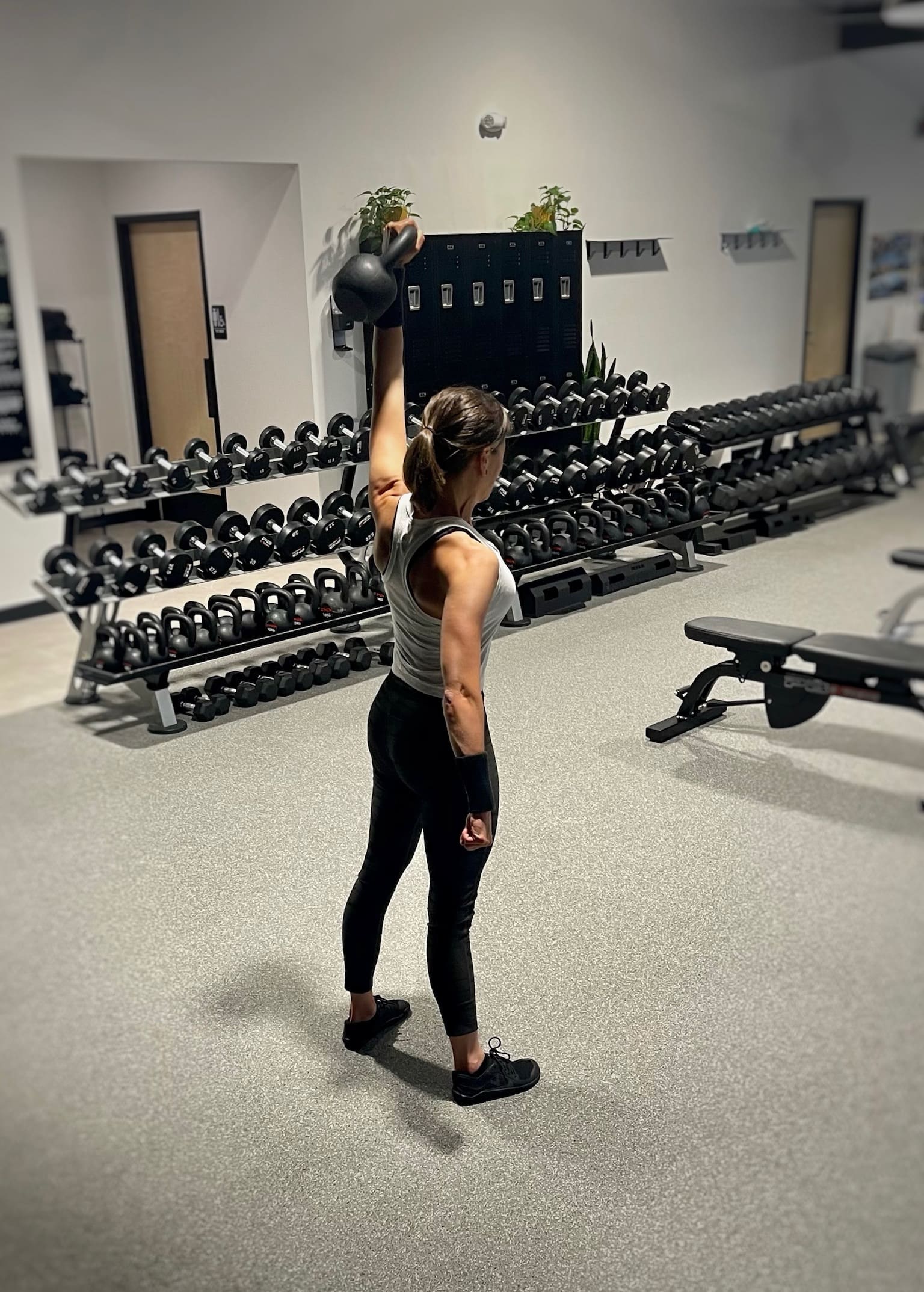
- Waiter Carry: Weight held overhead — improves shoulder stability and total-body coordination.
- Offset or Unilateral Carries: Load on one side only — helps correct muscular imbalances and builds symmetry.
The 12-Minute Loaded Carry Workout
Try this simple yet effective carry circuit twice per week—either as a standalone session or as a finisher after your strength workout.
Total Time: 12 minutes (6 minutes per side)
Instructions:
- Choose a kettlebell or dumbbell you can hold overhead for about one minute while maintaining perfect posture.
- Begin with an Overhead Carry. Once your form starts to break, lower the weight to the Rack Position.
- When you fatigue again, lower it to your side for a Suitcase Carry.
- Continue the sequence until you complete 6 minutes on one side, then switch arms.
- Rest as little as possible between transitions.
Workout Format:
- 1-Arm Overhead Carry
- 1-Arm Rack Carry
- 1-Arm Suitcase Carry
- 6 minutes per side
Final Thoughts
Loaded carries may not look fancy, but they build the kind of strength that lasts. They train your grip, core, and posture in a way few other exercises can. Add them into your weekly routine, and you’ll quickly feel—and see—the difference in how your body moves and performs.